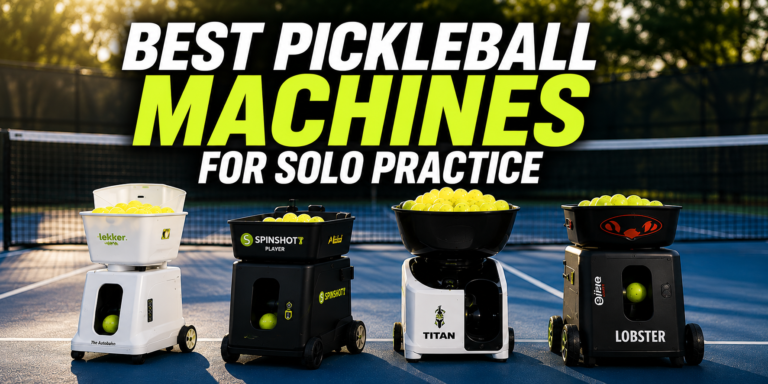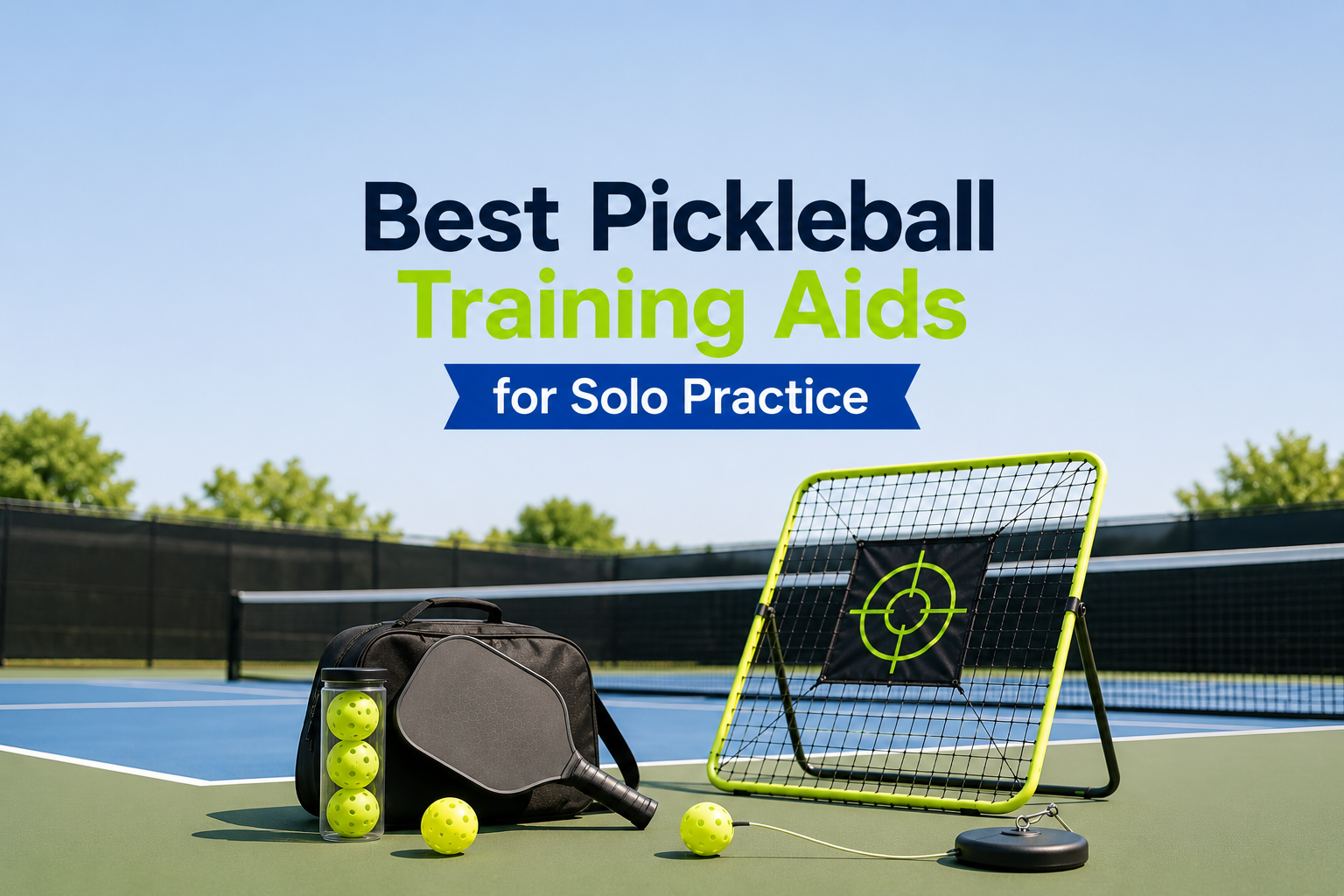
Best Pickleball Training Aids for Solo Practice (2026)
Solo practice is one of the most underrated ways to level up your game. Professionals use it to ingrain muscle memory, isolate weaknesses, and build reps without relying on a hitting partner’s schedule.
We researched the top-rated products available in 2026, dug through reviews, and identified five standout training aids that deliver real, measurable improvement. Here’s exactly what to buy — and why.
What to Look for in Pickleball Training Aids for Solo Practice
[IMAGE: pickleball training equipment comparison]
Not all training aids are created equal. Before you spend your money, it’s worth knowing the criteria that separate a genuinely useful tool from a gimmick that collects dust in your garage.
Portability and Court Setup
The best solo training aids are easy to transport, quick to set up, and don’t require a full regulation court. If it takes 20 minutes to assemble, you’ll skip practice days. Look for tools that are compact, lightweight, and ready to use in under five minutes — whether you’re at a public court, driveway, or gym.
Drill Versatility
A great training aid should support multiple shot types and skill levels. A ball machine that only feeds drives is far less valuable than one that simulates dinks, lobs, and drops. Similarly, a rebounder that lets you practice both backhand and forehand returns is more valuable than a single-angle wall.
Durability and Build Quality
Outdoor courts are rough on equipment. UV exposure, wind, and repeated ball impact all degrade cheaper materials quickly. Prioritize training aids made from powder-coated steel, weather-resistant nylon, or high-grade polypropylene. Read user reviews specifically for durability — not just initial impressions but feedback after several months of use.
For a deeper breakdown of what makes pickleball gear worth the investment, check out this authoritative guide at Pickleball Central’s expert tips section. You should also review USA Pickleball’s official rules to make sure your training drills reflect real gameplay standards.
[INTERNAL LINK: best pickleball paddles for beginners]
Top 5 Best Pickleball Training Aids for Solo Practice in 2026
[IMAGE: pickleball training aids lineup]
1. Lobster Pickleball Elite Liberty Ball Machine
[IMAGE: Lobster Pickleball Elite Liberty ball machine]
Why it’s recommended: The Lobster Elite Liberty is widely considered the gold standard for solo pickleball practice. It delivers consistent, programmable ball feeds across a huge range of shot types — from soft dinks to fast drives — making it ideal for players who want professional-level drilling without a hitting partner.
With its 2-line oscillation, adjustable speed, spin control, and 150-ball hopper capacity, this machine gives you full control over every training session. Battery-operated and portable, it’s built for real-world court use, not just gym demos.
Key Specs:
- Hopper capacity: 150 balls
- Speed range: 10–60 mph
- Feed rate: 2–10 seconds between shots
- Battery life: Up to 4 hours
- Weight: 38 lbs
- Oscillation: 2-line random or fixed
Pros:
- Highly programmable for drill variety
- Excellent battery life for long sessions
- Trusted brand with strong warranty support
Cons:
- Premium price point (~$599–$699)
- Heavy at 38 lbs for solo transport
- Learning curve on initial setup
Who it’s best for: Intermediate to advanced players who practice frequently and want the most versatile solo drilling experience available.
—
2. Tourna Pickleball Tutor Ball Machine
[IMAGE: Tourna Pickleball Tutor ball machine court]
Why it’s recommended: The Tourna Pickleball Tutor is the most accessible ball machine on this list — lighter, more affordable, and easier to set up than competitors. For players who want reliable feed consistency without breaking the bank, this machine punches well above its price class.
It throws balls at consistent intervals with adjustable speed and elevation, making it perfect for repetitive drilling of groundstrokes, volleys, and dinks. It’s battery or AC powered and comes with a 60-ball capacity hopper.
Key Specs:
- Hopper capacity: 60 balls
- Speed range: 10–55 mph
- Feed rate: Adjustable 1.5–7 seconds
- Power: Battery or AC adapter
- Weight: 17 lbs
Pros:
- Lightweight and genuinely portable
- More affordable than premium machines (~$299–$349)
- Dual power options for flexibility
Cons:
- Smaller hopper means more ball pickup breaks
- No spin control or oscillation
- Best for flat shots only
Who it’s best for: Beginner to intermediate players who want a dependable ball machine for groundstroke and volley repetition at a reasonable price.
—
3. Gamma Sports Pickleball Rebounder Net
[IMAGE: Gamma Sports pickleball rebounder net]
Why it’s recommended: Not every player needs or can afford a ball machine. The Gamma Sports Pickleball Rebounder is the best wall-alternative for solo practice — it returns the ball at a realistic angle, letting you develop consistent hand-eye coordination, improve reaction time, and groove your stroke mechanics with zero electricity required.
The adjustable frame angle means you can practice both dinks and drives. It’s made with a durable steel frame and high-tension net that holds up to aggressive ball striking over time.
Key Specs:
- Frame: Powder-coated steel
- Net tension: High-tension nylon
- Angle adjustment: Multiple positions
- Folds flat: Yes (compact storage)
- Weight: ~12 lbs
Pros:
- No power source needed — use anywhere
- Extremely affordable (~$79–$99)
- Builds natural hand-eye and reaction timing
Cons:
- Less ball variety than a machine
- Requires manual rally rhythm
- Can shift position on uneven surfaces
Who it’s best for: Budget-conscious players or those who want a quick, no-setup practice tool for warming up or drilling anywhere — court, driveway, or park.
—
4. Pickleball Swing Trainer by Engage (Swing Groover)
[IMAGE: Engage pickleball swing trainer tool]
Why it’s recommended: The Engage Swing Groover is a targeted training aid designed to fix one of the most common problems in recreational pickleball: an inconsistent swing path. By attaching to any standard paddle, it provides immediate feedback on arm position, wrist movement, and follow-through — helping players train proper mechanics even in their living room.
It’s the solo training tool you use when you don’t have a court or balls available. Coaches often recommend it as a daily off-court practice routine for stroke development.
Key Specs:
- Compatibility: Universal paddle attachment
- Use case: Off-court swing path training
- Resistance level: Adjustable
- Weight: Under 1 lb
- Material: High-grade polypropylene
Pros:
- Use anywhere — no court required
- Extremely lightweight and packable
- Immediate stroke feedback for correction
Cons:
- Doesn’t simulate live ball contact
- Limited to swing mechanics only
- Results require consistent daily use
Who it’s best for: Players at any level who want to refine their swing mechanics between court sessions — especially those recovering from injury or working on a specific stroke correction.
—
5. Franklin Sports Pickleball Ball Hopper with Training Balls
[IMAGE: Franklin Sports pickleball ball hopper training]
Why it’s recommended: Sometimes the most effective solo training aid is the simplest one. The Franklin Sports Ball Hopper paired with their X-40 Outdoor Training Balls gives you the foundation every other drill requires: consistent, high-quality balls in bulk, organized and ready to feed.
The hopper holds 60+ balls, doubles as a seat, and is built for outdoor use. Franklin X-40 balls are the official ball of the US Open Pickleball Championships — so your training balls match tournament conditions exactly.
Key Specs:
- Capacity: 60–65 balls
- Frame: Rust-resistant steel with rubber feet
- Ball type: Franklin X-40 outdoor (40 holes)
- Multi-use: Doubles as a bench/seat
- Weight: ~5 lbs empty
Pros:
- Tournament-grade balls included
- Doubles as a bench between drills
- Rust-resistant frame for outdoor durability
Cons:
- Requires a hitting partner or wall to use effectively
- No feeding mechanism — fully manual
- Balls sold separately in most bundles
Who it’s best for: Any player who does wall drills, uses a ball machine, or self-feeds shots — this is the essential infrastructure every solo practice setup needs.
Pickleball Training Aids Comparison Table
[IMAGE: pickleball equipment side by side comparison]
| Product | Type | Price Range | Best For | Power Required | Portability |
|---|---|---|---|---|---|
| Lobster Elite Liberty | Ball Machine | $599–$699 | Advanced players | Yes (Battery) | Moderate (38 lbs) |
| Tourna Pickleball Tutor | Ball Machine | $299–$349 | Beginners/Intermediate | Yes (Battery/AC) | High (17 lbs) |
| Gamma Rebounder Net | Rebounder | $79–$99 | All levels | No | Very High (12 lbs) |
| Engage Swing Groover | Swing Trainer | $29–$49 | Mechanics focus | No | Extremely High (<1 lb) |
| Franklin Ball Hopper | Ball Hopper | $39–$59 | All setups | No | Very High (5 lbs) |
How to Choose the Right Pickleball Training Aid for Your Game
[IMAGE: pickleball player evaluating gear]
The right training aid depends entirely on your current skill level, what you’re trying to fix, and how often you practice. Don’t start with the most expensive option if you’re still developing basic court awareness. A rebounder and a ball hopper can generate hundreds of quality reps per session at a fraction of the cost of a ball machine.
If you’re an intermediate player who already has stroke fundamentals and wants to break through a plateau, a ball machine like the Tourna Pickleball Tutor or Lobster Elite Liberty will be transformative. The ability to repeat the exact same shot 150 times in a row — adjusting speed, spin, and placement — is something no hitting partner can replicate on demand.
For players who travel frequently or can’t always access a full court, the Engage Swing Groover and a portable rebounder are your best combination. You can maintain technique and muscle memory anywhere — hotel hallway, backyard, or indoor facility — and show up to the court ready to perform rather than shaking off rust.
Finally, consider building a system rather than buying a single product. The best solo practice setups combine a ball source (hopper + balls), a return mechanism (rebounder or machine), and a mechanics tool (swing trainer). Together, they address every component of your game in one focused session.
[INTERNAL LINK: how to structure a pickleball solo practice session]
Frequently Asked Questions About Pickleball Training Aids
[IMAGE: pickleball player asking coach question court]
Can you really improve at pickleball practicing alone?
Absolutely. Solo practice is one of the fastest ways to build stroke consistency and muscle memory. Without the pressure of game situations, you can focus entirely on mechanics, timing, and repetition. Many professional players dedicate significant training hours to solo drilling using ball machines, rebounders, and wall practice before ever stepping into a competitive match.
What is the best budget pickleball training aid for solo practice?
The Gamma Sports Pickleball Rebounder is the best budget option, typically priced between $79–$99. It requires no power source, folds flat for transport, and lets you drill forehand, backhand, and dink mechanics with any number of balls. Paired with a Franklin ball hopper, you have a complete solo training setup for under $160 total.
Are pickleball ball machines worth the investment?
For players who practice at least 3–4 times per week, yes — a ball machine pays for itself in accelerated improvement. Machines allow you to isolate specific weaknesses and build reps at a pace and consistency no human partner can match. The Tourna Tutor at ~$299 is the best entry point, while the Lobster Elite Liberty justifies its premium price for serious competitive players.
What drills can I do alone without a ball machine?
Wall or rebounder drills are excellent solo options. You can practice forehand and backhand groundstrokes, volley punch shots, and even simulated dinking rhythms against a rebounder net. Self-drop feeding into a wall also helps with third-shot drop mechanics. Swing trainers like the Engage Swing Groover let you practice stroke paths away from the court entirely, at any time of day.
How do I choose between a rebounder and a ball machine?
It comes down to budget and training goals. A rebounder costs $80–$100 and develops reactive hand-eye coordination and rhythm — it’s great for all levels and requires no setup time. A ball machine ($300–$700) provides programmed feeds, allowing you to isolate specific shots and build reps with precise control. Serious players often use both: the rebounder for warm-up and reaction drills, the machine for targeted repetition work.
Conclusion: The Best Pickleball Training Aids for Solo Practice
[IMAGE: pickleball player celebrating improvement court]
The best pickleball training aids for solo practice aren’t one-size-fits-all — they’re tools matched to your specific game, schedule, and budget. If you want maximum versatility and are serious about competitive play, the Lobster Elite Liberty is the clear top pick. For budget-conscious players, the Gamma Rebounder paired with a Franklin Ball Hopper creates a powerful, affordable solo practice system.
Start with what you’ll actually use consistently. The best training aid is the one that gets you on the court more often — with more purpose, more reps, and more measurable improvement every session.