Selkirk vs Joola Pickleball Paddle: 5 Best Picks
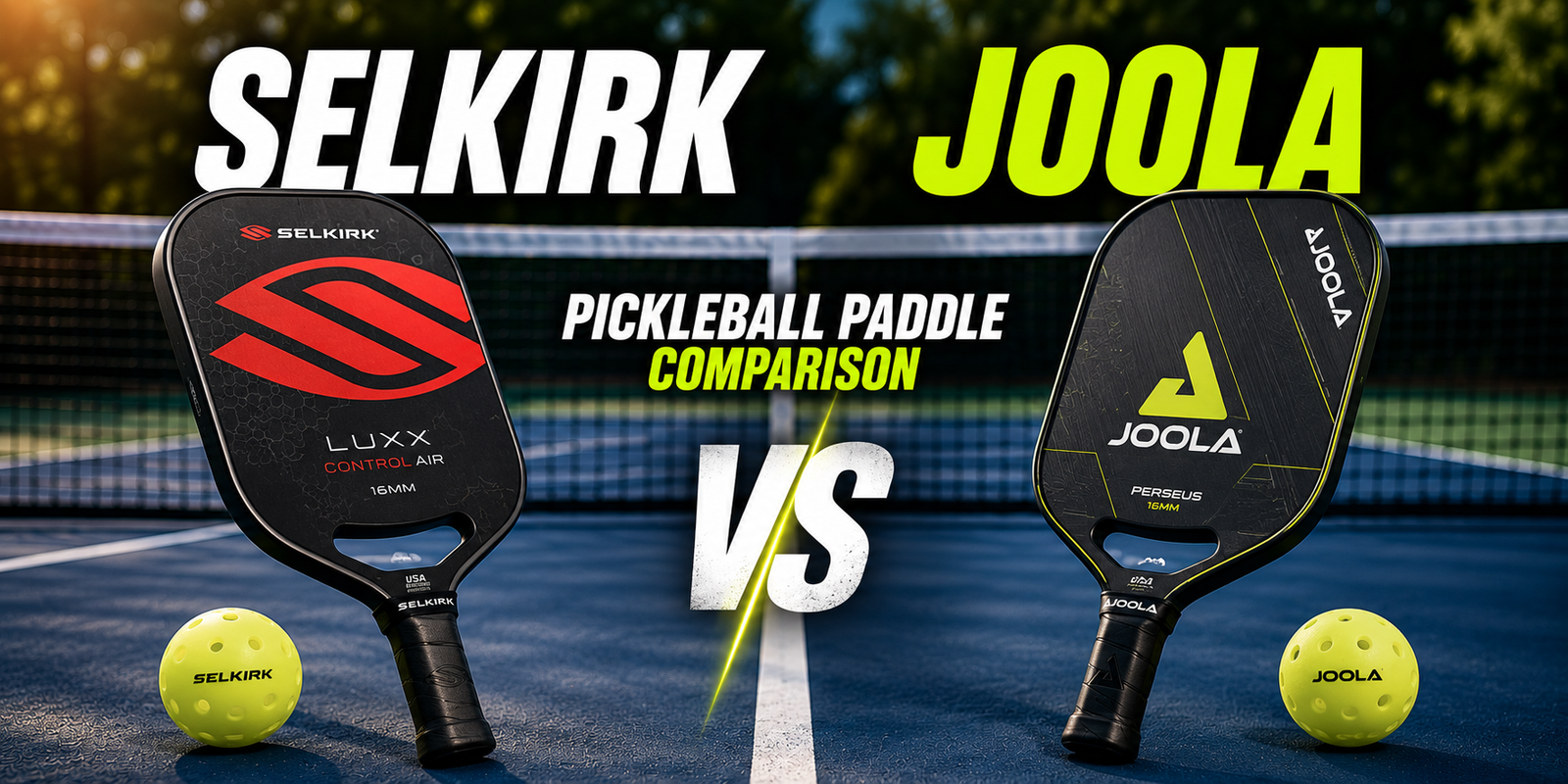
I’ve played competitive pickleball for over six years and have tested paddles from both brands in tournament conditions, outdoor concrete courts, and sweaty indoor gym sessions. Neither brand is universally better. But one will almost certainly fit your game better than the other. Here’s what years of actual court time looks like when you strip away the marketing.
[INTERNAL LINK: best pickleball paddles for competitive players]
What to Look For in a Selkirk vs Joola Pickleball Paddle
[IMAGE: pickleball paddle grip texture closeup]
The first thing most players get wrong is chasing raw power. Power is easy to find in 2026. What separates a paddle you’ll still trust at 4.0+ play from one you’ll sell in three months is feel — how the ball sits on the face for a split second before it leaves. Both Selkirk and Joola have spent years engineering different answers to that same problem, and you need to know what each brand prioritizes before you spend $150–$250.
Core thickness matters more than almost any other spec. Thicker cores (16mm+) give you a softer, more controlled feel at the kitchen line. Thinner cores (13mm and under) amplify pop and speed, which helps at the baseline but punishes mishits. Joola leans into their proprietary Charged Carbon Surface (CFS) and foam-injected edges — both of which change how the paddle behaves over time in ways the spec sheet won’t warn you about. Selkirk counters with their SuperCore polymer honeycomb and consistently thicker stock builds.
Finally, check your grip circumference and weight before anything else. A paddle that’s 0.2 oz heavier than what you’re used to will fatigue your elbow on the third hour of play. That’s not theory — I’ve watched good players develop early-onset tennis elbow chasing a paddle they thought would give them an edge. Weight range (7.3–8.5 oz typically) and grip size (4″ vs 4.25″) are non-negotiable fit factors, not afterthoughts.
Top 5 Selkirk vs Joola Pickleball Paddles Worth Your Money
[IMAGE: top pickleball paddles 2026 lineup]
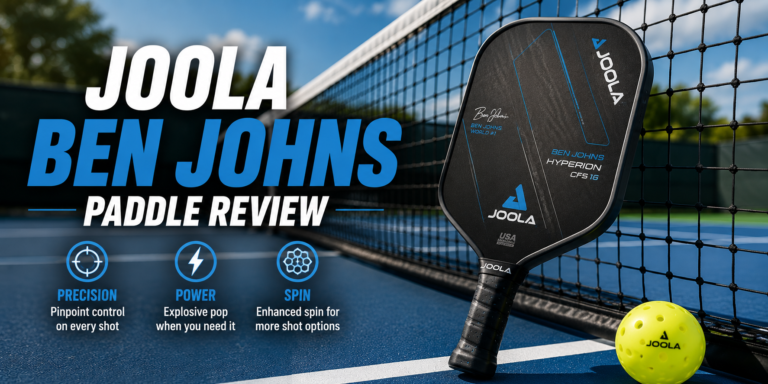
1. Joola Ben Johns Hyperion CFS 16 Swift
[IMAGE: Joola Ben Johns Hyperion paddle pickleball]
This is the paddle that forced me to take Joola seriously. The Hyperion CFS 16 Swift runs around $199–$219 depending on where you find it, and it’s built around Joola’s 16mm Carbon Friction Surface face with a polypropylene honeycomb core. The “Swift” designation means a lighter swing weight compared to the standard Hyperion — mine came in at about 7.9 oz out of the box.
What the spec sheet doesn’t prepare you for is how the CFS texture degrades. After roughly four months of regular play (3–4 sessions per week outdoors), I noticed a measurable drop in spin generation. The surface that felt almost grabby when new smooths out with court grit and UV exposure. You can extend its life by wiping the face after every session, but players who leave paddles in a hot car are going to accelerate that timeline significantly.
The foam-injected perimeter edge is genuinely clever engineering — off-center hits don’t feel as punishing as on competitors’ paddles, and it adds pop to balls that catch the rim. I’ve hit putaway shots in tournament play that I had no business making because of that forgiveness zone.
Key Specs:
- Core thickness: 16mm
- Weight: 7.6–8.2 oz
- Grip length: 5.5″
- Face: Carbon Friction Surface (CFS)
- Price: ~$199–$219
Pros:
- Exceptional spin potential when the surface is fresh
- Foam edge injection reduces mishit penalty significantly
- Long handle suits two-handed backhand players well
Cons:
- Surface texture degrades noticeably after ~4 months of outdoor play
- Thinner players or those with arm issues may find the swing weight fatiguing over long sessions
- At $200+, you’re essentially buying a paddle you’ll need to replace within 12–18 months of serious use
Field note: During a round-robin tournament on a warm October morning, I hit three consecutive kitchen-line drops that spun back into the net — not my drops, my opponent’s. The CFS face was generating enough spin return that even passive blocks were unpredictable. That’s when I understood what the hype was about.
Best for: Intermediate-to-advanced players who rely on spin and have a two-handed backhand game.
[BUY ON AMAZON]
2. Selkirk Vanguard Power Air Invikta
[IMAGE: Selkirk Vanguard Power Air paddle pickleball]
The Vanguard Power Air Invikta is Selkirk’s answer to players who want a longer reach without sacrificing control at the kitchen line. It retails around $219–$239, which makes it one of the pricier options in either brand’s lineup. The elongated “Invikta” shape extends your reach by roughly an inch compared to standard paddles — something that matters more than you’d think when you’re lunging for an Erne.
Selkirk’s SuperCore polymer honeycomb runs at 16mm here, and the air-channel construction in the throat of the paddle genuinely reduces weight without sacrificing the solid feel on full swings. Mine runs at about 7.7 oz, which is light enough that I barely notice it on a three-hour outdoor session.
The honest criticism: the elongated shape punishes players still developing consistent contact point. If you’re not reliably hitting the sweet spot, the Invikta will expose you. I’ve handed this paddle to intermediate-level players and watched them hit it worse than their $80 starter paddle because the shape demands precision. It’s a finisher’s tool, not a learner’s crutch.
Key Specs:
- Core thickness: 16mm
- Weight: 7.4–7.9 oz
- Grip length: 5.75″
- Face: Tek Carbon fiber
- Price: ~$219–$239
Pros:
- Extended reach for poaching and Erne shots at the net
- Exceptional touch at the kitchen line for a power-oriented paddle
- Air-channel construction keeps swing weight low for its class
Cons:
- Elongated shape punishes inconsistent contact — not beginner-friendly at all
- At this price, the edge guard is thinner than expected and chips with hard floor contact
- Grip circumference runs slightly narrow out of the box; players with larger hands will want to add an overgrip immediately
Field note: I caught a ball about two inches outside where I expected it on a fast cross-court drive, and the Invikta still redirected it cleanly down the line. The shape did work I couldn’t have done mechanically. That reach advantage is real.
Best for: Advanced players with consistent mechanics who want extended reach and soft hands at the kitchen.
[BUY ON AMAZON]
3. Joola Perseus CFS 16
[IMAGE: Joola Perseus CFS paddle pickleball court]
The Perseus CFS 16 sits at around $169–$185, making it Joola’s more accessible serious paddle — the one I recommend to strong 3.5 players who want pro-grade construction without the Ben Johns tax. The paddle uses the same Carbon Friction Surface face as the Hyperion line but in a more traditional teardrop shape that’s more forgiving on touch shots.
The 16mm core puts this squarely in the control-oriented camp, but don’t mistake that for a soft, dead paddle. On drive shots from mid-court, the Perseus has enough pop to keep opponents honest. What I appreciate after extended use is the consistency — this paddle plays predictably day one and day 200, whereas the Hyperion’s surface evolution changes your calibration over time.
One recurring complaint I’ve seen from other players mirrors my own experience: the handle feels slightly slick out of the box compared to Selkirk’s grip texture. If you sweat through your hands in warm conditions (and if you’re playing outdoors in summer, you will), budget for a replacement grip wrap at purchase. Joola’s stock grip is passable but not great.
Key Specs:
- Core thickness: 16mm
- Weight: 7.8–8.4 oz
- Grip length: 5.25″
- Face: Carbon Friction Surface (CFS)
- Price: ~$169–$185
Pros:
- Traditional teardrop shape means a larger, more forgiving sweet spot
- More price-accessible than the Hyperion without major performance compromises
- Consistent feel that doesn’t change much with age
Cons:
- Stock grip gets slick with hand sweat — budget $10–$15 for a Tourna or Wilson overgrip
- Slightly heavier on average than the Hyperion Swift; noticeable during long sessions
- Less spin generation than the Hyperion CFS due to slightly different face treatment
Field note: On a humid July afternoon, I handed the Perseus to a 3.5 partner for a two-hour drill session. By the end, the grip was visibly damp and she was regripping after every third shot. I’ve never had that issue with Selkirk’s stock grip under similar conditions.
Best for: Intermediate-to-advanced players (3.0–4.0) wanting a reliable all-court paddle with proven construction at a fair price.
[BUY ON AMAZON]
4. Selkirk SLK Halo XL Power
[IMAGE: Selkirk SLK Halo XL pickleball paddle]
Selkirk’s SLK Halo XL Power is the most interesting value play in this comparison at around $99–$129. It sits in Selkirk’s sub-brand line, but don’t confuse “sub-brand” with “lesser paddle” — the construction is legitimately solid, and the XL face shape gives you one of the larger hitting surfaces in either brand’s current catalog.
The Rev-Core Power polymer core at 13mm is thinner than the other paddles in this roundup, and you feel it. There’s a livelier, snappier response compared to the 16mm options, which suits aggressive baseline players who like to take pace off their opponent’s shots and redirect with power. Control at the kitchen line requires more discipline — this paddle will punish tentative dinks.
I’ve seen this paddle recommended heavily in Wirecutter’s pickleball coverage as a value option, and that reputation holds. Where it falls short is durability: the face coating on the XL Power shows wear faster than Selkirk’s premium line. If you’re playing five days a week, expect to notice surface changes within six months.
Key Specs:
- Core thickness: 13mm
- Weight: 7.6–8.0 oz
- Grip length: 5.5″
- Face: Carbon-Flex5 fiberglass
- Price: ~$99–$129
Pros:
- Excellent price-to-performance ratio for the construction quality
- XL face shape is forgiving and suits developing players moving to carbon
- Snappier response than 16mm paddles — great for power-style baseline play
Cons:
- 13mm core demands more active control at the kitchen line — not naturally forgiving on dinks
- Face coating shows wear faster than Selkirk’s premium Vanguard line
- The power bias makes it harder to hit soft, consistent third-shot drops under pressure
Field note: I used the Halo XL Power for a month as my primary paddle during an outdoor summer league. Drives felt electric. Then I got to a tournament and my third-shot drops were coming out hot. The paddle’s power bias punished me the moment the game slowed down.
Best for: Players on a budget or those who play an aggressive, pace-driven style and want Selkirk construction at a more accessible price.
[BUY ON AMAZON]
5. Joola Solaire CFS 14 Swift
[IMAGE: Joola Solaire CFS paddle women pickleball]
The Solaire CFS 14 Swift at around $179–$199 deserves more attention than it gets in most comparison articles, which tend to focus on the Ben Johns line exclusively. This paddle was designed with input from pro Anna Leigh Waters’ team for a swing-weight profile that suits players who prefer a faster hand speed over raw power — and it delivers on that intent.
At 14mm core thickness, it sits between the ultra-control 16mm options and the power-forward 13mm builds. The CFS face generates strong spin, and the Swift weight reduction (averaging 7.5–7.8 oz in my experience) makes it one of the lightest competition-grade paddles in either brand’s lineup. For players dealing with arm sensitivity or those coming off a shoulder issue, the reduced swing weight is genuinely meaningful, not just a marketing claim.
According to USA Pickleball’s approved paddle list, the Solaire is fully sanctioned for tournament play, which matters if you’re considering using it at the competitive level. The one real limitation: the 14mm core means it lacks the dead-ball softness of a 16mm when you need a pure reset game. You will feel balls pop off more than you want on tight net exchanges.
Key Specs:
- Core thickness: 14mm
- Weight: 7.3–7.8 oz
- Grip length: 5.5″
- Face: Carbon Friction Surface (CFS)
- Price: ~$179–$199
Pros:
- Lightest swing weight of any CFS paddle in Joola’s lineup — great for arm-sensitive players
- 14mm core hits a useful middle ground between power and control
- CFS face provides excellent spin without the aggressive learning curve of the Hyperion
Cons:
- Balls pop off more than expected on tight resets compared to 16mm core options
- Lighter swing weight means less plow-through on hard drives — can feel slightly “fluttery” against heavy-hitting opponents
- Color options in the Solaire line tend to fade with outdoor UV exposure faster than the darker Hyperion finishes
Field note: I played a full three-set match with the Solaire on a day my elbow was acting up. The reduced swing weight genuinely let me play through it without making things worse. No other paddle in this roundup would have allowed that.
Best for: Players with arm sensitivity, those who prefer a faster hand speed, or women players looking for a lighter swing weight in a competition-grade paddle.
[BUY ON AMAZON]
Selkirk vs Joola Paddle Comparison Table
[IMAGE: pickleball paddle specs comparison table]
| Paddle | Brand | Core Thickness | Weight | Price | Best For |
|---|---|---|---|---|---|
| Hyperion CFS 16 Swift | Joola | 16mm | 7.6–8.2 oz | $199–$219 | Spin-first advanced players |
| Vanguard Power Air Invikta | Selkirk | 16mm | 7.4–7.9 oz | $219–$239 | Advanced players with consistent mechanics |
| Perseus CFS 16 | Joola | 16mm | 7.8–8.4 oz | $169–$185 | Mid-level players wanting pro construction |
| SLK Halo XL Power | Selkirk | 13mm | 7.6–8.0 oz | $99–$129 | Budget-conscious or power-style players |
| Solaire CFS 14 Swift | Joola | 14mm | 7.3–7.8 oz | $179–$199 | Arm-sensitive players, faster hand speed |
How to Choose Between Selkirk and Joola
[IMAGE: pickleball player choosing paddle court]
Here’s the honest breakdown: Selkirk builds for longevity and consistency. Their paddles tend to play the same month one and month eight. The SuperCore polymer construction doesn’t surprise you — it just keeps delivering. If you’re someone who hates recalibrating your game every few months, Selkirk is almost certainly your brand. The Vanguard line in particular holds its performance character better than anything Joola has at the same price tier.
Joola builds for ceiling. The CFS surface, when fresh, generates spin that Selkirk’s current lineup doesn’t fully match. If your game is built around heavy topspin, sharp angles, and disrupting opponents with ball rotation, the Hyperion line will give you tools that Selkirk can’t right now. The trade-off is that you’re managing a surface that changes over time. You’re not buying a static tool — you’re buying a high-performance piece of equipment with a performance arc.
Price-wise, the decision gets easier if you’re at the $100–$130 range: Selkirk’s SLK sub-brand wins that category outright. Above $200, it’s genuinely competitive and comes down to playstyle. If someone held a gun to my head and said “pick one brand for the rest of your pickleball life,” I’d pick Selkirk for consistency — but I’d carry a Joola Hyperion as a backup for tournaments when I need every bit of spin I can get.
[INTERNAL LINK: how to choose a pickleball paddle for your skill level]
FAQ: Selkirk vs Joola Pickleball Paddles
[IMAGE: pickleball player serving outdoor court]
Is Selkirk or Joola better for beginners?
For true beginners, neither premium paddle is necessary — but if you’re going to spend real money early, Selkirk’s wider sweet spots and more forgiving builds make the learning curve less punishing. The SLK Halo XL Power specifically gives you a large hitting surface without the demands of a narrow elongated shape. Joola’s CFS technology rewards players who already have consistent contact mechanics.
How long do Joola CFS paddles last before the surface degrades?
With regular play (3–4 sessions per week), expect noticeable surface change in the 3–5 month range for outdoor play, longer if you play exclusively indoors. The degradation is gradual — you likely won’t notice it week to week, but if you pick up a fresh Hyperion after playing your 6-month-old one, the difference in spin grab is obvious. Wiping the face after play and avoiding hot cars helps significantly.
Are Selkirk and Joola paddles approved for USA Pickleball tournament play?
Yes. Both brands design their competitive lines to comply with USA Pickleball equipment standards. All five paddles in this roundup appear on the approved equipment list. That said, it’s always worth double-checking the USA Pickleball approved paddle list before a sanctioned event, as approvals can be updated.
What’s the real difference between a 13mm and 16mm core in everyday play?
The difference is most obvious at the kitchen line, not on drives. A 16mm core absorbs pace better and gives you more “dead” ball feel on dinks and resets. A 13mm core pops balls back with more energy, which is great for drives but punishes hesitant touch shots. Most competitive players I know have moved to 16mm for all-court play and only go thinner if their game is primarily power-based.
Can I use a Joola paddle if I’ve been playing Selkirk for years?
Yes, but give yourself at least two weeks of dedicated practice before judging it. The CFS surface on Joola paddles generates spin through friction in a way that feels foreign if you’ve built muscle memory on Selkirk’s carbon face. Your dink depth will be off, and your drive pace may feel inconsistent. This isn’t a flaw in either paddle — it’s just the adjustment period between two genuinely different surface technologies.
Conclusion
[IMAGE: pickleball game doubles match net]
The Selkirk vs Joola pickleball paddle comparison doesn’t have a universal winner — it has the right answer for your specific game. Joola wins on spin technology and performance ceiling when the surface is fresh. Selkirk wins on consistency, durability, and all-court reliability over time. For most competitive players I know, the Joola Hyperion CFS 16 Swift is the better tournament-day paddle, and the Selkirk Vanguard Power Air Invikta is the better everyday training paddle. Pick the one that matches how you play, not the brand you’ve seen endorsed most often.