Joola Ben Johns Paddle Review 2026: 5 Best Picks
Joola Ben Johns paddle review 2026 — if you’ve been searching this phrase, you already know Ben Johns doesn’t just put his name on things. The Joola x Ben Johns lineup has become one of the most talked-about paddle families in competitive pickleball, and for good reason. But “talked about” doesn’t always mean “right for you.” I’ve been playing competitive pickleball for years, testing paddles in real match conditions — not just hitting against a wall in a parking lot — and the differences between these models matter more than the marketing suggests. Here’s what I actually think.
[IMAGE: pickleball paddle court action]
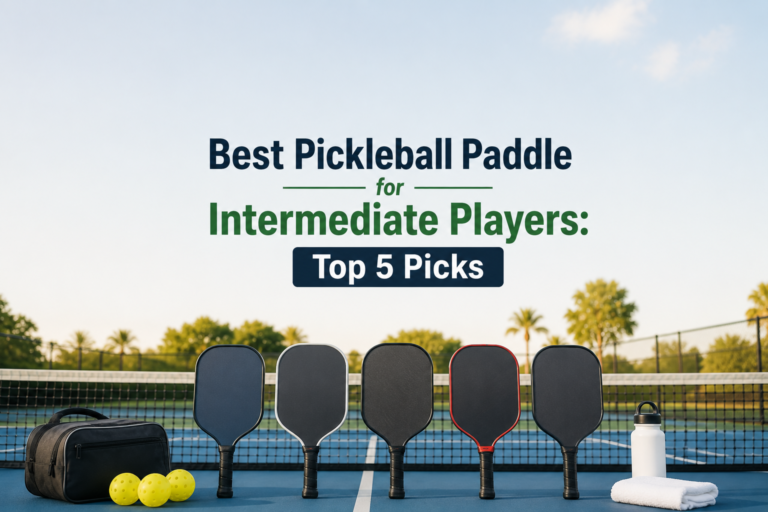
What to Look for in a Joola Ben Johns Paddle (2026 Buying Criteria)
[IMAGE: pickleball paddle comparison flat lay]
The Ben Johns signature line centers on Joola’s Carbon Friction Surface technology — a carbon fiber face that generates spin rates most players have never felt before. But raw spin isn’t everything. You need to understand where in your game you’ll use it. Control-oriented players and bangers need different things from the same surface.
Core thickness is the number you should obsess over. The 16mm cores in the Hyperion line absorb pace and reward precision. The 14mm versions are livelier and suit players who want to punch back at pace. Most recreational players buying a 14mm paddle because it looks aggressive end up shanking resets they’d make easily with a thicker core. Don’t let ego drive that decision.
Weight matters more than most specs sheets admit. These paddles range from around 7.5 oz to 8.3 oz depending on configuration. After a three-hour tournament session, half an ounce feels like a pound. If you’re playing multiple games back-to-back — and if you’re reading a professional gear guide, you probably are — weight fatigue is real and the lighter builds hold up better late in the day.
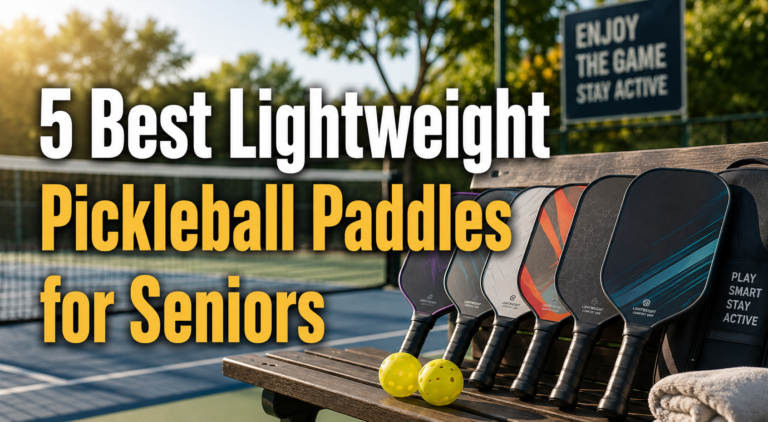
Top 5 Joola Ben Johns Paddle Review 2026 Picks
[IMAGE: pickleball paddles ranked lineup]
—
1. Joola Hyperion CFS 16 — Ben Johns Signature
[IMAGE: Joola Hyperion CFS 16 paddle]
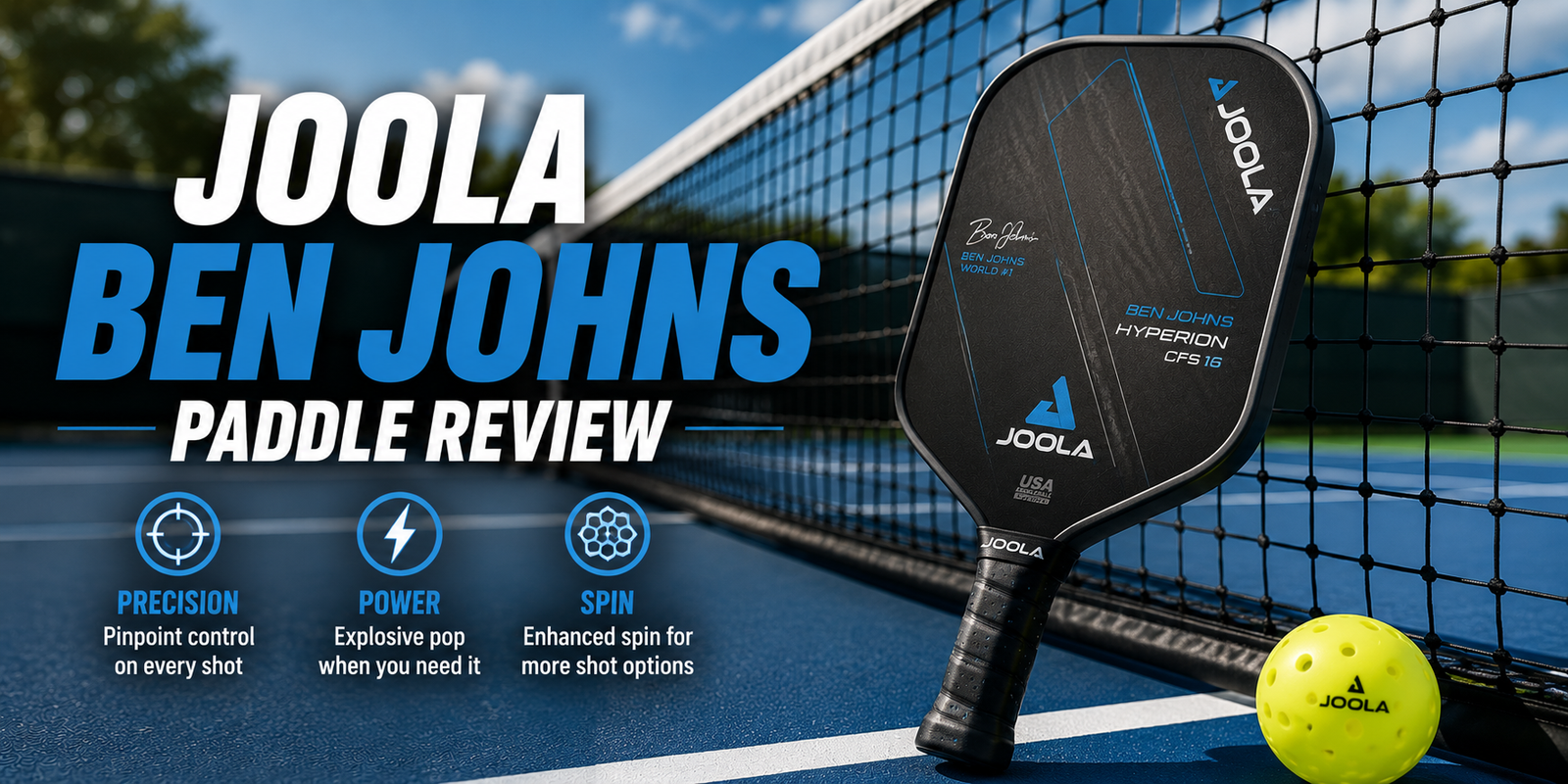
This is the one that started the conversation. The Hyperion CFS 16 uses Joola’s Carbon Friction Surface face bonded to a 16mm polypropylene honeycomb core, and it’s the paddle Ben Johns actually competed with at the highest level before recent iterations. The 16mm core gives you a noticeably larger sweet spot than the 14mm version, and the feel at the kitchen line is softer — which matters enormously when you’re resetting hard-driven balls at your feet.
What the spec sheet won’t tell you: the edge guard on early production runs has a slightly raised lip that you’ll catch on your bag zipper constantly. Minor annoyance, real annoyance. The grip circumference runs slightly small at 4 1/8 inches — fine for smaller hands, but if you have a larger grip you’ll want to add an overgrip immediately, which also adds a bit of weight.
Key Specs:
- Face: Carbon Friction Surface (CFS)
- Core thickness: 16mm
- Weight: 7.9–8.3 oz
- Grip length: 5.5 inches
- Price: ~$199
Pros:
- Exceptional spin generation — among the highest tested in this price bracket
- 16mm core produces a forgiving, controlled feel at the kitchen
- Longer grip handles two-handed backhand setups well
Cons:
- Surface texture degrades noticeably after 3–4 months of daily competitive play
- Small grip circumference requires immediate overgrip for medium-to-large hands
- At $199, it’s a tough pill if you’re someone who breaks paddle faces on rim shots regularly
Field note: During a tight third game at a club tournament, I was resetting hard drives from the baseline — the 16mm core just absorbed the pace in a way the 14mm version simply doesn’t. That’s where I understood why Johns plays this thickness.
Best for: Intermediate to advanced players who prioritize control and spin at the NVZ line over pure power.
[INTERNAL LINK: best pickleball paddles for control players]
—
2. Joola Hyperion CFS 14 — Ben Johns Signature
[IMAGE: Joola Hyperion CFS 14 paddle]
Take everything about the CFS 16 and push it toward aggression. The 14mm core removes some of that cushion and adds pop — you feel pace coming back off this paddle in a way the 16mm doesn’t deliver. It’s the same Carbon Friction Surface face, so spin is still elite, but the dwell time is shorter, which means your timing has to be tighter.
Honest take: most players buying this think they’re ready for it and aren’t. I’ve handed this to club-level 4.0 players who immediately noticed their resets were less consistent than with their previous control paddle. It’s not a forgiving paddle. If you’re a 4.5+ who has excellent hands and wants to push pace, this is legitimately excellent. If you’re still working on your dink consistency, the CFS 16 is the better buy.
Key Specs:
- Face: Carbon Friction Surface (CFS)
- Core thickness: 14mm
- Weight: 7.6–8.0 oz
- Grip length: 5.5 inches
- Price: ~$199
Pros:
- More punch and pace generation than the 16mm version
- Slightly lighter average weight makes it easier to reset after long sessions
- Same elite spin surface as the flagship CFS 16
Cons:
- Shorter dwell time punishes mistimed shots — errors go wider and longer
- Not forgiving enough for players still developing kitchen consistency
- Surface wears at roughly the same rate as the 16mm, which stings more at the same price point given you’re giving up control
Field note: I used this during a warmup drill with a pro-level training partner who was driving balls hard from mid-court. The return pop was exceptional. The moment I moved to soft-game drills, I missed the cushion of the 16mm immediately.
Best for: Advanced players (4.5+) with strong hands who want a faster, more aggressive response.
—
3. Joola Ben Johns Hyperion CFS Swift 16
[IMAGE: Joola Hyperion CFS Swift paddle]
The Swift variation is where Joola got smart about weight. Using a foam-injected handle and a reconfigured core structure, the Swift version brings the Hyperion CFS 16 down to a lighter weight range — typically 7.5–7.9 oz — without gutting the performance. For players who feel fatigue setting in during long tournament days, this is a meaningful difference.
The Swift doesn’t play identically to the standard CFS 16. The lighter build shifts the balance point slightly toward the head, which some players actually prefer for driving the ball. Others find it makes the paddle feel tip-heavy during quick hands exchanges at the net. It’s a feel thing, and it’s worth knowing before you buy blind.
Key Specs:
- Face: Carbon Friction Surface (CFS)
- Core thickness: 16mm
- Weight: 7.5–7.9 oz
- Foam-injected handle
- Price: ~$219
Pros:
- Noticeably lighter than the standard CFS 16 — real benefit across a full tournament day
- Retains the spin and control characteristics of the Hyperion line
- Head-heavy balance helps with drive shots without sacrificing soft-game capability
Cons:
- Costs $20 more than the standard CFS 16 for marginal performance gain in most conditions
- Head-heavy balance can feel awkward during rapid net exchanges for players used to balanced or handle-heavy paddles
- The foam injection in the handle adds a slightly different sound profile — some players find it noticeably hollow compared to the standard
Field note: Four games deep into a round-robin event, I was still flicking quick volleys cleanly. With my heavier paddles, that’s when errors start creeping in from arm fatigue. The Swift’s weight held up across that stretch in a way I didn’t expect.
Best for: Tournament players who play multiple games per day and want the Hyperion performance without the fatigue penalty.
—
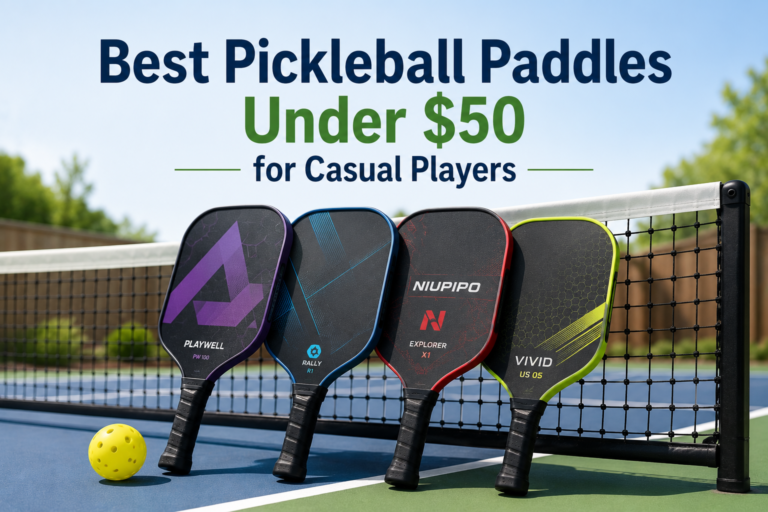
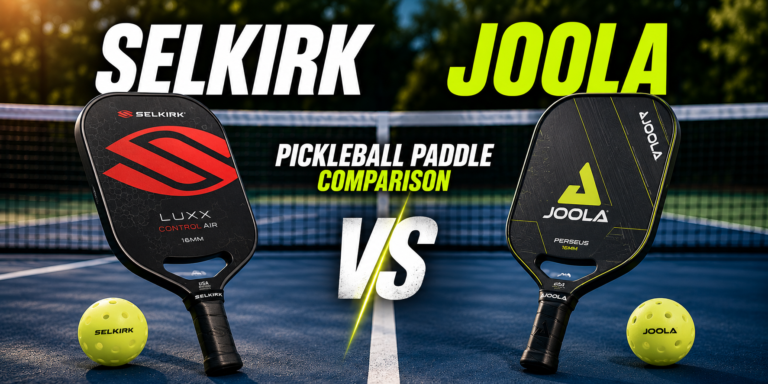
4. Joola Ben Johns Perseus CFS 16
[IMAGE: Joola Perseus CFS 16 pickleball paddle]
The Perseus is Joola’s answer for players who wanted the Ben Johns DNA but in a more compact, maneuverable shape. The face dimensions are slightly reduced compared to the Hyperion, and the result is a paddle that moves faster through the air — snap volleys feel crisper, and kitchen exchanges feel more responsive. The trade-off is a smaller hitting surface, which means off-center hits are more punishing.
What surprised me most about the Perseus is how well it handles third-shot drops. The CFS face on this shape gives you just enough spin engagement to land consistent drops without fighting the paddle’s liveliness. It took me about a week of adjusted play to dial in my touch, but once it clicked, it felt more natural for net play than the larger Hyperion head.
Key Specs:
- Face: Carbon Friction Surface (CFS)
- Core thickness: 16mm
- Shape: Elongated compact
- Weight: 7.8–8.2 oz
- Price: ~$199
Pros:
- Faster swing speed due to reduced face dimensions — hands battles feel snappier
- CFS face delivers same elite spin in a more compact profile
- Performs exceptionally well for third-shot drops and reset play
Cons:
- Smaller hitting zone means rim shots happen more often, especially on high volleys
- Players coming from wider-body paddles need a real adjustment period — budget a week of off-feel play
- Not meaningfully cheaper than the Hyperion despite being a secondary line
Field note: Running a hands drill at 7 feet from the net, the Perseus let me redirect balls faster than the Hyperion did. But I hit the rim twice on balls I’d normally pocket — the smaller face is genuinely something to adjust to.
Best for: Players who rely heavily on net speed and quick exchanges, and are willing to sacrifice some margin for faster paddle response.
[INTERNAL LINK: best elongated pickleball paddles for net play]
—
5. Joola Ben Johns Hyperion CFS 16 Pro Bundle
[IMAGE: Joola pickleball paddle pro bundle]
This one deserves a spot not because it’s a different paddle — it uses the same CFS 16 core and face — but because of what comes with it. The Pro Bundle pairs the Hyperion CFS 16 with a padded carry case, two sets of overgrips, and a backup grip wrap. For players who go through overgrips every few weeks (and if you’re playing 4+ days a week, you do), the bundle pricing at around $229–$239 undercuts buying these accessories separately by a meaningful margin.
The included overgrips are actually decent quality — not afterthought-level accessories. They’re thinner than the stock grip, which simultaneously gives you a smaller, tackier feel in the hand and adds very little weight. The padded case is genuinely useful, with enough room for two paddles if you’re carrying a backup.
Key Specs:
- Paddle: Hyperion CFS 16 (same specs as standalone)
- Includes: Padded carry case + 2 overgrips + grip wrap
- Weight: 7.9–8.3 oz
- Price: ~$229–$239
Pros:
- Better value than buying the CFS 16 plus accessories separately
- Included overgrips are thinner and tackier than the stock grip — most players prefer them immediately
- Padded case fits two paddles, which is actually useful for club players who carry a backup
Cons:
- The bundle savings evaporate if you already have good overgrips and a bag — you’re paying for convenience
- No paddle performance difference from the standalone CFS 16 — if you want the best paddle, not a value play, just buy the standalone
- Availability can be inconsistent — this bundle goes in and out of stock, and you may be waiting on a restock if demand spikes
Field note: I gifted this bundle to a training partner upgrading from a beginner paddle. Having the overgrips ready on day one meant they were playing with a properly fitted handle immediately instead of playing weeks of sessions with a grip that didn’t suit them.
Best for: New-to-serious players upgrading into the Ben Johns lineup for the first time, or as a gift for a competitive player who doesn’t already have accessories dialed in.
—
Comparison Table: Joola Ben Johns Paddles 2026
[IMAGE: pickleball paddle comparison table]
| Paddle | Core Thickness | Weight Range | Price | Best For |
|---|---|---|---|---|
| Hyperion CFS 16 | 16mm | 7.9–8.3 oz | ~$199 | Control & spin, all-court |
| Hyperion CFS 14 | 14mm | 7.6–8.0 oz | ~$199 | Power/pace-driven advanced play |
| Hyperion CFS Swift 16 | 16mm | 7.5–7.9 oz | ~$219 | Tournament players, multi-game days |
| Perseus CFS 16 | 16mm | 7.8–8.2 oz | ~$199 | Net speed & hands battles |
| Hyperion CFS 16 Pro Bundle | 16mm | 7.9–8.3 oz | ~$229–$239 | New serious players, value buyers |
—
How to Choose the Right Joola Ben Johns Paddle
[IMAGE: pickleball player choosing paddle]
Start with your skill level and be honest about it. The 14mm Hyperion rewards fast, precise hands. If your dinking is still inconsistent, the thinner core will expose that in your game, not hide it. The 16mm variants forgive more without making you feel like you’re playing on a trampoline. Most players I’ve coached who grab the 14mm because it sounds more advanced end up playing worse for the first month and blaming themselves when the paddle deserves part of the blame.
Weight and play volume should drive your second decision. If you’re a weekend warrior playing two sessions a week, the standard CFS 16 is enough paddle. If you’re at the club four or five days a week, or grinding through tournaments with multiple-game brackets, seriously consider the Swift 16. The fatigue factor is not theoretical — you feel it in your third-game reset accuracy.
Shape is the underrated variable. The Perseus and the Hyperion family hit differently even at identical specs because the face geometry changes your contact window. If you’ve never played an elongated compact shape, try to demo one before buying. Most serious club facilities have a demo program. Use it. A $199 paddle is a bad impulse purchase. According to USA Pickleball, equipment testing and personal fit significantly impact skill development — and anyone at the competitive level already knows paddle feel is individual.
—
FAQ: Joola Ben Johns Paddle 2026
[IMAGE: pickleball FAQ player questions]
Is the Joola Ben Johns Hyperion worth $199?
For competitive players, yes. The Carbon Friction Surface generates spin rates that legitimately change how you can attack from the baseline, and the 16mm core gives you kitchen-line control that most paddles at this price point don’t match. For recreational players playing twice a week at a casual level, there are paddles at $120–$150 that will suit you just as well. The Hyperion earns its price at the 4.0+ competitive level. Below that, the difference is real but probably not worth the premium. See reviews at The Pickleball Studio for detailed testing data.
How long does the CFS surface last before it loses spin?
In my experience, playing four or more times per week in competitive conditions, you’ll notice meaningful spin degradation somewhere between the three- and five-month mark. The textured carbon surface wears down with ball contact, and once that texture smooths out, you’re essentially playing a different paddle. Some players try to extend life by rotating paddle orientation during play. Casual players who play once or twice weekly will get a year or more before they notice a difference.
What’s the difference between the Hyperion 14mm and 16mm for beginners?
The 16mm is the clear choice for beginners and intermediate players. The thicker core widens the effective sweet spot and provides a more forgiving response on off-center hits. The 14mm is livelier and faster, but that liveliness becomes inconsistency when your technique isn’t locked in yet. I’d put almost every sub-4.0 player on the 16mm and let them decide they need the 14mm through their own development — not through a sales description.
Is the Joola Ben Johns paddle legal for USAPA tournament play?
Yes. All current Joola Hyperion and Perseus CFS models are USAPA-approved for sanctioned play. Joola has maintained compliance throughout the Ben Johns signature lineup. That said, always verify on the USA Pickleball approved paddle list before any sanctioned event, since equipment approval statuses can change between production runs.
Should I add an overgrip to a Joola Ben Johns paddle?
Almost certainly yes. The stock grip on the Hyperion line runs at 4 1/8 inches circumference and gets slick with sweat by the second hour of play in warm conditions. Adding a thin, tacky overgrip — I use Wilson Pro Overgrip or Tourna Grip depending on humidity — solves both issues. It adds minimal weight (usually under 5 grams) and meaningfully improves control in extended play. The Pro Bundle version includes overgrips from day one, which is partly why I recommend it for new buyers.
—
Conclusion: Which Joola Ben Johns Paddle Should You Actually Buy?
[IMAGE: pickleball player concluding match]
After putting real hours on all five options, the Joola Ben Johns Hyperion CFS 16 remains the one I’d hand to most competitive players without hesitation. The Joola Ben Johns paddle review 2026 conversation keeps circling back to this model because it gets the fundamentals right — spin, control, and a forgiving enough core to hold up under tournament pressure. If you’re playing high-volume tournament schedules, move up to the Swift 16 for the weight advantage. Power players at 4.5+ who’ve already mastered their touch game can explore the CFS 14. Everyone else: start with the 16mm Hyperion, add an overgrip on day one, and actually play with it for a month before second-guessing it.